


Thailand’s Housing Market Enters a “Selective Recovery”: Price Support, Slower Launches, Policy Tailwinds
Thailand’s residential market is moving from correction into a selective recovery shaped by tighter finance, slower launches, and targeted government support. As we step into 2025, there is cautious optimism among developers who are now prioritizing inventory absorption. Prices have begun to edge up due to rising costs, while policy support is working to lower friction for homes priced below THB 7 million.
Current Market Landscape
CBRE’s 2025 outlook highlights a paradigm shift in the housing market, indicating that developers are focusing on clearing existing inventory due to limited new project launches. The sector is primarily domestically driven, facing financing challenges on both the buyer and developer sides. According to the newly released data from AREA for January 2025, new launches in the Bangkok Metropolitan Region decreased by 19% in 2024, with project numbers falling from 462 to 375. Furthermore, the number of units dropped by 39% (from 101,536 to 61,453) and the overall project value decreased by 26%.
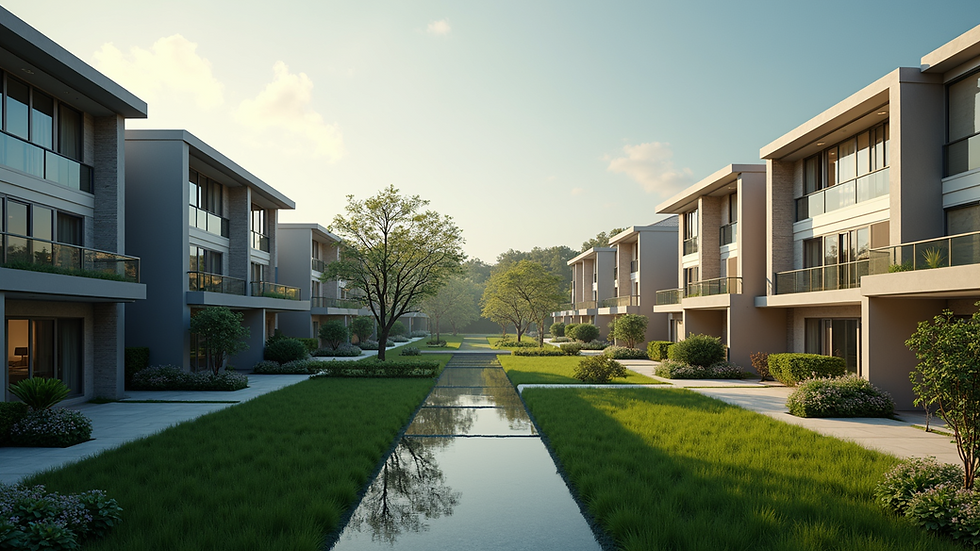
Despite these declines, a modest recovery of around 10% is anticipated in 2025 as developers manage backlogs carefully, focusing on cash flow and absorption rates.
Price Trends and Influences
Interestingly, while demand remains subdued, prices have started to climb, primarily driven by increased land and construction costs. The Bank of Thailand's preliminary Residential Property Price Index for Q2 2025 showcases a year-on-year rise of 2.71% across the country. Townhouses saw the highest increase at 4.88%, followed by condominiums at 1.43%. This trend hints at a shift toward ground-oriented housing formats as potential homeowners are more cautious, balancing affordability with perceived risks.

Policy Support and Its Implications
Recent government policies are creating favorable conditions for the housing market. The Cabinet has reduced ownership transfer and mortgage registration fees to a mere 0.01% for homes valued below THB 7 million, effective from April 22, 2025, to June 30, 2026. This move is transformational as it significantly lowers closing costs for buyers in the mass market.
Additionally, the Bank of Thailand has implemented a temporary relaxation of Loan-to-Value (LTV) ratios, allowing for up to 100% financing under specific conditions through June 2026. This is particularly beneficial for absorbing inventory priced under THB 10 million and serves as a catalyst for market activity.
Monetary Policy and Economic Context
In terms of monetary policy, the Bank of Thailand's current policy rate stands at 1.50% after cuts made in 2025. The Monetary Policy Committee (MPC) has indicated a bias toward accommodation as economic growth softens and inflation continues to hover near or below target levels. This environment is supportive of developer funding costs and also improves domestic loan affordability, albeit with banks remaining selective in their lending.
As of mid-year, growth projections for Thailand in 2025 have been revised downward due to uncertainties in trade and tourism. The World Bank has adjusted the GDP forecast to approximately 1.8%, while the Asian Development Bank (ADB) sees it at around 2.0%. In contrast, the National Economic and Social Development Council (NESDC) has guided growth expectations of 1.8% to 2.3%, accompanied by low inflation. This economic backdrop suggests a focus on absorption rather than exuberance within the residential sector.

Design and Format Implications
The current market sentiment and the realities of rising costs strengthen the case for low-rise townhouses and suburban detached homes, especially those equipped with access to transit upgrades and schools. On the other hand, urban condominiums will need to adopt sharper pricing strategies alongside the incorporation of features like Environmental, Social, and Governance (ESG) considerations, wellness features, and resilient engineering to stand out in an increasingly competitive landscape.
What to Watch in the Coming Weeks
As the first quarter of 2025 progresses, certain indicators will be crucial to monitor:
Inventory absorption vs. new launches in the Bangkok metropolitan area: Developers are still prioritizing inventory clearance, so be on the lookout for shifts in strategy.
Land Office activity for transactions priced below THB 7 million, particularly under the new 0.01% fee structure. This will be vital in assessing buyer engagement and market activity.
Updates from the MPC concerning the trajectory of the current policy rate of 1.50%. Changes here can significantly impact borrowing costs, thereby influencing buyer behavior.
Actionable Next Steps
For potential buyers: If your budget is ≤ THB 7 million, it is advisable to run a closing-cost comparison pre and post fee cuts. Be sure to also explore your bank's LTV offerings to maximize the benefits available.
For developers: Consider planning your project launches around Q1-Q2 2026, focusing on value-driven formats such as townhouses and low-rise units that can take full advantage of the current fee and LTV easing policies.
As Thailand’s housing market shifts into this selective recovery phase, understanding and adapting to these nuances will be critical for both buyers and developers. The interplay of selective recovery signals, policy support, and design innovation will shape the future of Thailand's residential landscape in the years to come.



Comments