


Thailand Market Entry for European Manufacturers: From Initial Action Plan to Execution
Thailand can be a strong base for European manufacturers, but the first decision should rarely be “open a company” or “find a supplier.” Those may become necessary steps, but they are not a market-entry strategy by themselves.
A manufacturer entering Thailand often faces several decisions at the same time. Should the project start with sourcing, assembly, import, distribution, local production, licensing, or regional coordination? Does the product need registration, standards testing, labeling, or import permits? Are drawings, specifications, and bills of materials complete enough for procurement? Are there customers, distributors, or pilot users ready to validate the offer before scale-up?
These questions are connected. A weak answer in one area can create delays in another. That is why Thailand market entry for European manufacturers should begin with a clear objective, a diagnostic review, and an Initial Action Plan that links route choice, industrial readiness, procurement, regulatory exposure, and commercial execution.

Start with the objective before choosing the structure
A European manufacturer may see Thailand as a sourcing base, a manufacturing location, a distribution market, or a platform for ASEAN. Each objective leads to a different entry route.
A company that wants to source components from Thai suppliers has different needs from a company that wants to import finished products. A business planning assembly in a Free Zone works with different assumptions from a company selling through a local distributor. A product company validating demand may not need the same structure as a manufacturer preparing for investment, factory setup, BOI promotion, and long-term local employment.
The first step is to define the activity with enough precision:
Manufacturing, assembly, or subcontract production
Import and distribution
Sourcing and procurement
Technical services or after-sales support
Regional licensing or coordination
Product commercialization through local channels
Phased validation before legal or industrial commitment
This objective should then be tested against the product scope, market route, regulatory exposure, procurement requirements, budget, documents, and execution sequence.
An Initial Action Plan gives this process a practical shape. It is not a long theoretical report. It should answer direct questions that affect action:
What will be done in Thailand, and what will remain in Europe or another jurisdiction?
Which products, components, SKUs, or technologies are included in the first phase?
What documents are available, and what needs to be prepared?
Which licenses, permits, standards, or classification issues may apply?
Which procurement categories are critical?
Which customers, distributors, or partners must be validated before scale-up?
What should happen first, second, and third?
Without this sequence, teams often move too quickly into isolated tasks. They ask a lawyer to open a company, send drawings to suppliers, contact distributors, and ask about import rules at the same time. That can create activity, but not control.
A better approach is to build the sequence before spending heavily.
Route choice should come before company setup
Opening a Thai company can be the right answer. It can also be premature.
Before committing to incorporation, BOI promotion, a Foreign Business License, Free Zone arrangements, a distributor agreement, or a local partner, the project needs to define which structure matches the actual activity.
Common routes include:
Route | When it may fit | What must be checked early |
Thai company | Local operations, hiring, contracting, warehousing, or sales | Foreign ownership limits, activity scope, tax and compliance duties |
BOI promotion | Eligible manufacturing, technology, or investment projects | Activity eligibility, capital needs, timelines, reporting duties |
Foreign Business License | Restricted activities performed by a foreign-owned entity | Scope of services or trading and approval feasibility |
Free Zone model | Import, assembly, re-export, or logistics-linked operations | Customs process, stock control, location, and operational rules |
Hong Kong execution vehicle | Licensing, regional contracting, procurement, or commercialization | Substance, tax, contracts, transfer pricing, and governance |
Distributor or importer | Early market access without direct local operation | Control, margins, registration holder, service quality, exclusivity |
Local partner | Market access, technical support, or regulated activity support | Role split, authority, IP, termination, and incentives |
Phased validation | Testing product-market fit before heavier commitment | Pilot terms, customer evidence, cost limits, and next-stage triggers |
The correct route changes with the activity. Manufacturing is different from assembly. Import is different from local distribution. Sourcing is different from providing services. Regional coordination is different from acting as the seller of record.
This is why route assessment must come before company setup. A structure that suits procurement may not suit regulated product sales. A distributor route may solve the first imports but weaken control over customer data or product registration. A BOI route may support industrial investment, but only if the activity and timeline justify it.
Structural and regulatory decisions should be reviewed with qualified professional advisors. The purpose of an Initial Action Plan is not to replace legal, tax, or investment advice. It is to prepare the right questions, evidence, sequence, and decision points before those advisors are engaged or before formal commitments are made.
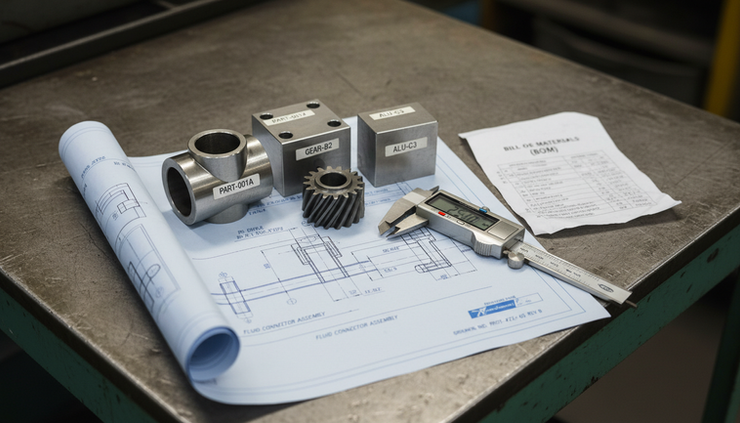
Industrial readiness determines procurement quality
Supplier search is often treated as the starting point. In practice, procurement only works well when the product package is ready enough for comparison.
A Thai supplier cannot quote properly if the specification is incomplete. A procurement team cannot compare offers if each supplier interprets the request differently. A quality review cannot be meaningful if there is no defined standard.
Before issuing RFQs, the project should review product and industrial readiness. That normally includes:
Product specifications and performance requirements
2D drawings, 3D files, tolerances, and materials
Bill of materials, component breakdown, and approved alternatives
Expected quantities by phase, not only long-term targets
Tooling requirements, moulds, fixtures, jigs, or test equipment
Prototype and sample requirements
Quality standards, test methods, and inspection criteria
Certifications or declarations already held in Europe
Packaging requirements for local sale, export, or e-commerce
Logistics assumptions, including incoterms, storage, and handling
The difference between “we need suppliers” and “we need suppliers for this part, at this quantity, under these tolerances, for this certification pathway” is significant.
Procurement planning should also separate supplier discovery from supplier control. A good process moves through clear stages:
Prepare the technical and commercial RFQ package.
Identify and screen potential suppliers.
Onboard suppliers through company, capability, and compliance checks.
Compare quotations on more than unit price.
Request samples, prototypes, or trial runs.
Gather quality evidence, test reports, and process documentation.
Negotiate terms, contracts, warranties, and delivery conditions.
Set follow-up routines for corrective actions, recurring orders, and performance review.
Price matters, but it is only one part of the decision. Lead time, tooling ownership, change control, minimum order quantities, confidentiality, after-sales response, and quality documentation may matter more during the first year.
This is especially true for European SMEs and engineering businesses that carry technical know-how but lack a large local procurement office. A structured process reduces improvisation and makes supplier decisions easier to defend.
Regulatory review should begin early
Regulatory work is often delayed until the product is ready to ship. That can cause avoidable problems.
Early review does not mean every permit must be completed on day one. It means the project should identify regulatory exposure before route, procurement, packaging, labeling, and sales decisions become fixed.
The review should usually cover:
Product classification and HS code discussion
Import pathway and importer of record
Required permits, licenses, or registrations
Mandatory Thai standards or sector-specific approvals
Labeling, language, safety warnings, and packaging rules
Test reports, certificates, declarations, and technical files
Who holds the approval or registration
Renewal, reporting, traceability, and post-approval duties
For some products, the route to market may be simple. For others, the structure determines who can import, register, hold approvals, distribute, or provide after-sales obligations. That can affect distributor selection, customer contracts, warehousing, warranty planning, and even packaging artwork.
Regulatory review also connects back to procurement. If a component must meet a standard, the RFQ should ask for evidence. If packaging needs specific labeling, the packaging supplier should know early. If the importer of record carries obligations, the commercial agreement should reflect that role.
The aim is not to overcomplicate the first phase. The aim is to avoid discovering too late that the chosen supplier, distributor, importer, product label, or corporate structure cannot support the actual route to market.

Commercial validation should happen before scale-up
A technically sound product still needs a commercial route. This is where many industrial market-entry projects become too inward-looking. They focus on entity setup, sourcing, and compliance, then leave customers and channels for later.
The commercial route should be designed before scale-up. That does not mean launching a full sales organisation at the start. It means identifying how demand will be tested and how real buyers will be approached.
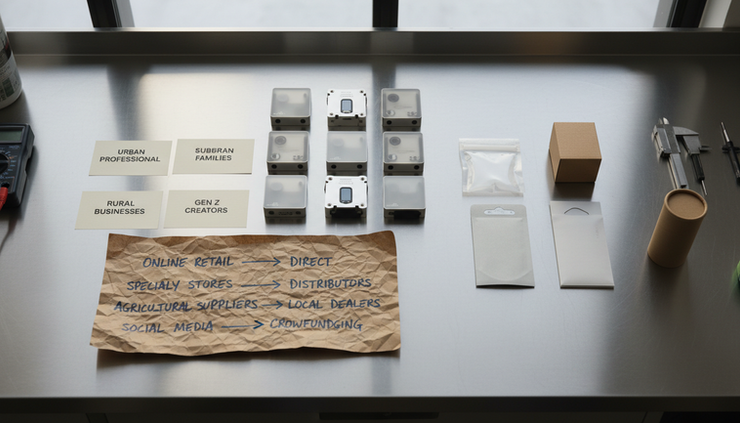
A practical commercial workstream may include:
Customer segmentation by industry, use case, buyer type, and urgency
B2B channel mapping, including distributors, installers, integrators, OEMs, and direct accounts
Pricing logic for import, local assembly, and distribution margins
Sales materials that explain the product clearly in the Thai market context
CRM setup to track leads, contacts, follow-ups, and pilot status
Outreach lists and partner screening
Pilot projects, sample placement, demonstrations, or trial orders
Feedback loops into product adaptation, packaging, service, and documentation
The commercial plan should also define what counts as evidence. A friendly conversation is not the same as a qualified lead. A distributor’s interest is not the same as a purchase order. A pilot user’s technical approval is not the same as budget approval.
For technical products, early evidence may include sample acceptance, site trials, specification inclusion, distributor commitment, repeat RFQs, or paid pilot projects. The project should decide which evidence justifies moving from validation to investment.
Role separation can protect focus and execution
Many European product companies combine intellectual property, engineering, procurement, licensing, and sales inside one structure. That may work at home, but Asian market entry can benefit from clearer role separation.
SABE and ONNIA offer a useful framework example.
SABE can represent the Italian IP and product development role. It holds the technical origin, product design, and development logic. ONNIA Worldwide can represent the Hong Kong licensing, execution, and commercialization role. It can coordinate licensing, regional execution, procurement, channel activities, and market-facing development.
This example is not a one-size-fits-all model. It shows how roles can be separated when the project needs clearer control:
One party protects and develops the product and IP.
Another party manages licensing, execution, procurement, and commercialization.
Local Thai structures, suppliers, distributors, or partners are added only where they serve the route.
Such separation can help clarify contracts, decision rights, cost responsibility, and commercial targets. It can also support phased entry, where the project validates procurement, regulation, and customer demand before committing to a heavier Thai operating structure.
Ku-Malu can be seen as a next commercial stage in this type of framework. At that stage, technology moves from a technical concept into a market-facing brand, supported by buyer segmentation, B2B materials, channel strategy, and a clearer launch path.
The lesson is not that every manufacturer should use these exact entities or this exact sequence. The lesson is that structure should reflect function. IP, execution, procurement, licensing, and commercialization may need different roles, especially when the project crosses Europe, Hong Kong, Thailand, and ASEAN.
How AD ASIA Consulting connects planning to execution
AD ASIA Consulting’s Asia Industrialization & Market Entry service is built around the gap between intention and execution. Many projects already have a product, a target market, and internal enthusiasm. What they often need is a structured path that connects decisions in the right order.
An Initial Action Plan can support that path by covering:
Diagnostic review of objectives, product scope, documents, and readiness
Route assessment across Thai company setup, BOI, FBL, Free Zone, distributor, importer, local partner, Hong Kong execution vehicle, or phased validation
Procurement planning, including RFQs, supplier onboarding, comparison, sampling, quality evidence, contracts, and follow-up
Regulatory coordination with qualified advisors, including classification, import pathway, permits, standards, labeling, and post-approval duties
Launch readiness, including customer segments, B2B channels, pricing, sales materials, CRM, outreach, and pilot planning
Execution control so procurement, regulatory work, commercial validation, and structure decisions do not move in separate directions
This approach can help a European manufacturer avoid early commitments that later need to be corrected. It can also create a clearer basis for discussions with lawyers, tax advisors, BOI specialists, freight partners, certification bodies, suppliers, distributors, and local operators.
The value is not in producing a document for its own sake. The value is in forcing the right questions before capital, time, and reputation are committed.
A practical Initial Action Plan should make the project easier to manage. It should identify what can start now, what needs evidence, what must wait for advisor review, and what would trigger the next stage.
For example, a company may decide to start with supplier RFQs and regulatory classification before forming a Thai entity. Another may need a distributor and importer model for the pilot phase, followed by BOI assessment only if demand and industrial logic are confirmed. Another may use a Hong Kong execution vehicle for licensing and regional contracting while testing Thai procurement and sales channels.
None of these routes is automatically better. The right route is the one that fits the activity, product, risk profile, evidence, and commercial plan.
AD ASIA Consulting can support European manufacturers that want to prepare an Initial Action Plan before committing to company setup, BOI, FBL, supplier selection, industrial setup, product registration, procurement, or launch. Structural and regulatory decisions should be reviewed with qualified professional advisors, but those discussions are stronger when the project already has a clear operational map.
The strongest first question is not ‘How quickly can we open a company or begin production?’ It is ‘What structure, evidence and execution sequence does this project need to enter Thailand properly?’


Comments